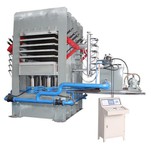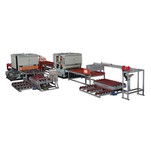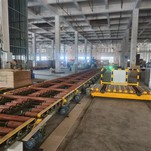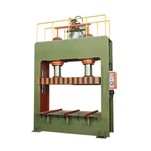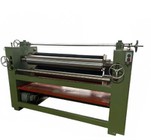

Edge cutting machines are essential equipment for cutting, trimming, and shaping boards and wood materials in industrial production. Their advantages directly impact production efficiency, processing precision, and product quality. With the development of furniture manufacturing, woodworking, and panel industries, edge cutting machines play an irreplaceable role in modern production.
Firstly, edge cutting machines offer high processing precision. Precision guides and a stable machine frame ensure stable saw blade operation, maintaining straight and smooth cuts. For processing furniture boards, flooring, and composite panels, edge cutting machines provide accurate dimensions and clean edges, reducing material waste.
Secondly, edge cutting machines deliver high processing efficiency. Automated feeding systems and high-speed saw blades allow continuous processing of boards, greatly increasing production speed and reducing manual labor. For large-scale manufacturers, edge cutting machines significantly boost output while lowering labor costs.
Thirdly, edge cutting machines ensure safe operation. Modern machines are equipped with protective covers, emergency stops, and overload protection devices, effectively safeguarding operators. Adjustable saw blade speed, cutting depth, and feed rate allow flexible adaptation to different materials and processing requirements, providing safe and reliable operation.
Additionally, edge cutting machines are highly versatile, capable of processing boards of various thicknesses and materials, including solid wood, plywood, MDF, and composite panels. Some advanced models integrate multifunctional modules such as chamfering, polishing, and precise edge finishing, meeting diverse production needs and offering multiple functions in one machine.
In summary, edge cutting machines provide high precision, high efficiency, safety, and versatility. They help manufacturers improve product quality, reduce costs, and play a crucial role in modern industrial production.