

Hey there! As a supplier of Large Sanding Machine, I often get asked about the feeding speed of these bad - boys. So, let's dive right in and break it down.
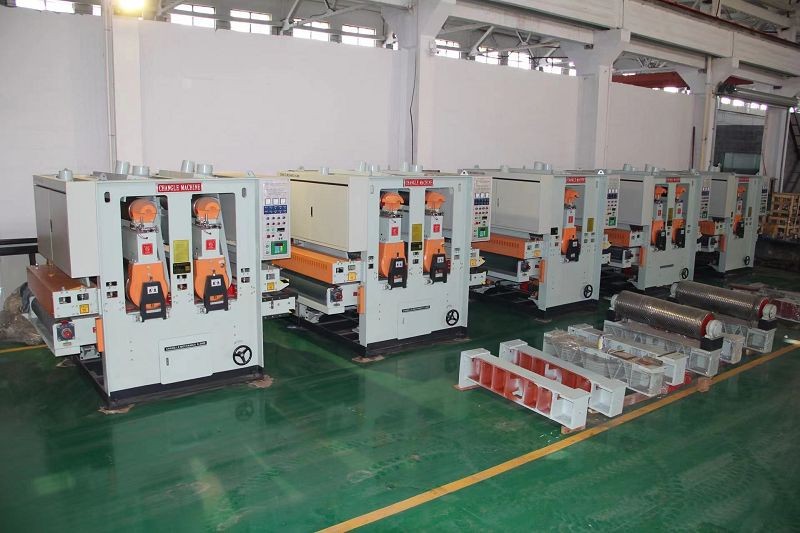

First off, what exactly is the feeding speed of a large sanding machine? Well, it's basically how fast the material being sanded moves through the machine. This speed is super important because it can have a huge impact on the quality of the sanding job and the overall efficiency of the process.
There are a bunch of factors that can affect the feeding speed. One of the main ones is the type of material you're sanding. Different materials have different hardness and density levels, which means they need to be fed through the machine at different speeds. For example, if you're sanding a softwood like pine, you can usually get away with a faster feeding speed compared to a hardwood like oak. Hardwoods are denser and more difficult to sand, so you'll need to slow down the feeding speed to ensure a smooth and even finish.
Another factor is the grit of the sandpaper. Coarser grits are used for rough sanding and can handle a faster feeding speed, while finer grits are for finishing and require a slower speed. If you try to use a fine - grit sandpaper at a high feeding speed, you might not get the smooth finish you're looking for, and you could even damage the sandpaper or the machine.
The design and capabilities of the large sanding machine itself also play a big role. Some machines are built to handle high - speed sanding, while others are more suited for slower, more precise work. For instance, our Three Head Sander is designed to offer a good balance between speed and precision. It has multiple sanding heads that can work simultaneously, allowing for a faster overall sanding process.
Let's talk about the range of feeding speeds you might encounter. In general, large sanding machines can have feeding speeds anywhere from 5 to 30 meters per minute. But this can vary widely depending on the factors I mentioned earlier. For a rough sanding job on a soft material, you might be able to set the feeding speed at the higher end of the range. But for a detailed finishing job on a hard material, you'll probably want to drop it down to the lower end.
Now, you might be wondering how to determine the optimal feeding speed for your specific job. Well, it's a bit of a trial - and - error process. You can start by referring to the machine's manual, which usually has some guidelines based on different materials and sandpaper grits. But in practice, you'll need to test a small piece of the material at different feeding speeds to see what works best. Pay attention to the finish quality, the amount of dust generated, and how the machine is performing. If the sanding looks uneven or the machine seems to be struggling, you might need to adjust the speed.
One thing I've noticed in the industry is that many people are looking for ways to increase the feeding speed without sacrificing quality. This is where our Professional Sanding Machine comes in. It's equipped with advanced technology that allows for more efficient sanding at higher speeds. The machine has a powerful motor and a well - designed sanding mechanism that can handle a faster flow of material while still providing a great finish.
But it's not just about the machine. Proper maintenance is also crucial for maintaining a good feeding speed. Regularly cleaning the machine, changing the sandpaper when it gets worn out, and lubricating the moving parts can all help keep the machine running smoothly and at the optimal speed.
In addition to the factors I've mentioned, the operator's skill level can also influence the feeding speed. An experienced operator will be able to make quick adjustments based on the material and the sanding results, which can lead to a more efficient sanding process. Training your operators on how to use the machine properly and how to adjust the feeding speed is definitely worth the investment.
When it comes to choosing a large sanding machine, you need to consider your specific needs. If you're mainly doing large - scale production with soft materials, you might want a machine that can handle high feeding speeds. But if you're working on more delicate projects with hard materials, a machine with more precision and the ability to adjust the speed more finely might be a better choice.
As a supplier of large sanding machines, we're always here to help you make the right decision. We can provide you with detailed information about the feeding speeds of our machines, as well as offer advice on how to optimize the sanding process for your specific requirements. Whether you're a small woodworking shop or a large manufacturing plant, we've got the right solution for you.
If you're interested in learning more about our Large Sanding Machine or have any questions about feeding speeds or other aspects of sanding, don't hesitate to get in touch. We're happy to have a chat and discuss how our machines can meet your needs. You can reach out to us to start a conversation about your sanding requirements and see if our products are the right fit for your business.
References:
- Woodworking machinery industry reports
- Technical manuals of large sanding machines


