
As a supplier of Large Sanding Machine, I've seen firsthand how the grit of an abrasive belt can have a huge impact on the sanding results of large sanding machines. In this blog, I'll break down what abrasive belt grit is, how it affects the sanding process, and why it matters for your large sanding machine.
What is Abrasive Belt Grit?
Abrasive belt grit refers to the size of the abrasive particles on the belt. It's measured by a number, and the higher the number, the finer the grit. For example, a 60 - grit belt has larger abrasive particles compared to a 220 - grit belt. The grit size determines how aggressively the belt will remove material and the smoothness of the finish it will leave on the workpiece.
The Influence of Abrasive Belt Grit on Material Removal
Coarse Grits (40 - 80)
When you're dealing with a large sanding machine and need to remove a significant amount of material quickly, coarse grits are your go - to. For instance, if you're working on rough lumber that has a lot of unevenness or if you're trying to remove old paint or a thick layer of varnish, a 40 - 80 grit belt will do the job efficiently.
These belts are like the heavy - duty workers of the sanding world. They can take off large chunks of material in a short time. But be careful! Because they're so aggressive, they can also leave a rough surface behind. So, if you're looking for a smooth finish right away, a coarse grit isn't the best choice.
Medium Grits (100 - 180)
Medium grits strike a balance between material removal and surface smoothness. They're great for getting rid of the scratches left by coarse grits and starting to refine the surface. If you've used a 60 - grit belt to remove a thick layer of material on a wooden board, switching to a 120 - grit belt can start to smooth out the surface and make it more even.
Medium - grit belts are often used in the intermediate stages of the sanding process. They help prepare the surface for finer sanding, and they're suitable for a wide range of materials, from wood to metal.
Fine Grits (220 - 400)
Fine grits are all about achieving a smooth, polished finish. After using coarse and medium grits to shape and prepare the surface, a fine - grit belt can take it to the next level. These belts are used to remove the fine scratches left by medium grits and create a surface that's ready for painting, staining, or other finishing treatments.
For example, if you're sanding a piece of furniture that will be stained, using a 220 - 400 grit belt will ensure that the surface is smooth enough for the stain to be applied evenly. The downside is that fine - grit belts remove material very slowly, so they're not ideal for large - scale material removal.
The Impact on Surface Finish
Roughness and Smoothness
The grit of the abrasive belt directly affects the roughness or smoothness of the sanded surface. Coarse grits leave a rough surface with visible scratches, while fine grits create a smooth, almost mirror - like finish. This is important because the surface finish can affect the appearance and functionality of the workpiece.
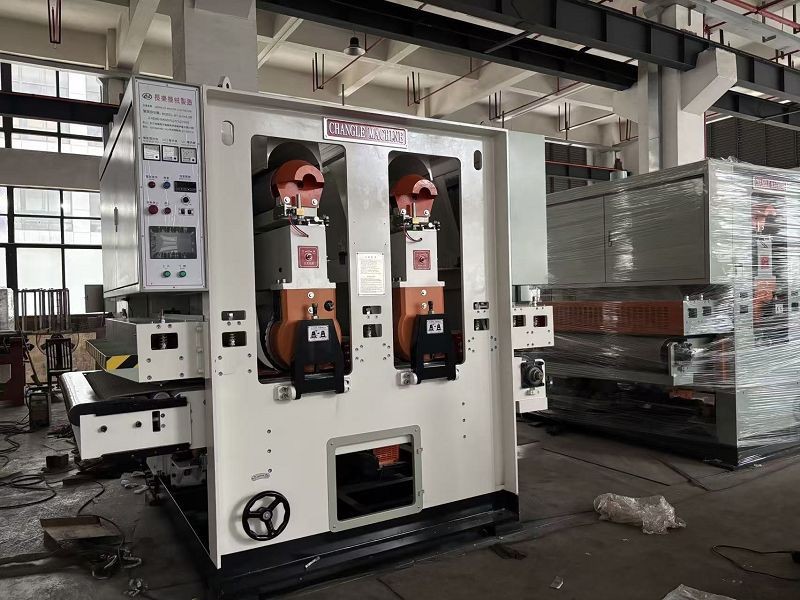

In the case of a Three Head Sander, you can use different grit belts on each head to achieve a multi - stage sanding process. For example, the first head can use a coarse grit to remove material, the second head can use a medium grit to refine the surface, and the third head can use a fine grit to give it a smooth finish.
Surface Texture
The grit also influences the surface texture. Coarse - grit belts can create a more textured surface, which might be desirable in some applications, such as creating a rustic look on wood. On the other hand, fine - grit belts produce a very smooth and uniform texture.
Choosing the Right Grit for Your Large Sanding Machine
Material Type
Different materials require different grits. For softwoods like pine, you can start with a coarser grit and then move to finer grits. Hardwoods like oak, however, may need a more gradual transition from medium to fine grits to avoid scratching the surface.
Metals also have specific grit requirements. For example, aluminum is a soft metal, and using a very coarse grit can cause smearing. So, it's often better to start with a medium grit and then use finer grits for a smooth finish.
Sanding Purpose
If you're sanding for shaping or material removal, coarse grits are appropriate. But if you're sanding for finishing, fine grits are the way to go. Sometimes, you may need to use a combination of grits to achieve the desired result.
The Role of Large Sanding Machines in Grit - Based Sanding
Large sanding machines, such as Double Head Sanding Machine, are designed to handle different grit belts efficiently. They can provide consistent pressure and speed, which is crucial for achieving uniform sanding results.
These machines can also handle large workpieces, making them ideal for industrial applications. With the right combination of grit belts and machine settings, you can achieve high - quality sanding results in a relatively short time.
Conclusion
The grit of an abrasive belt plays a crucial role in the sanding results of a large sanding machine. Whether you're looking to remove a large amount of material, refine the surface, or achieve a smooth finish, choosing the right grit is essential.
As a supplier of large sanding machines, I understand the importance of getting the sanding process right. If you're in the market for a large sanding machine or need advice on choosing the right abrasive belts for your project, don't hesitate to reach out. We're here to help you make the most of your sanding operations and achieve the best results possible.
References
- Woodworking Magazine. "Understanding Abrasive Belt Grits."
- Metalworking Handbook. "Sanding Techniques for Different Metals."
- Industrial Sanding Equipment Manuals.