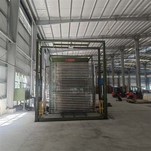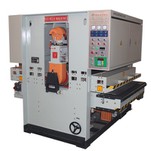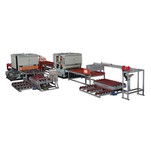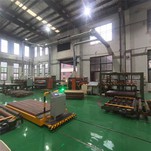

In modern industrial manufacturing, hot press machines have become essential equipment due to their unique combination of heat and pressure. Compared to traditional processing methods, they offer multiple advantages, making them widely used in metal processing, composite material production, and electronic component manufacturing.
Firstly, hot press machines provide high-precision processing. By precisely controlling temperature and pressure, they can shape materials uniformly in a short period, ensuring dimensional accuracy and structural consistency. This is particularly valuable for high-end composites, precision electronic components, and aerospace parts.
Secondly, hot press machines significantly enhance production efficiency. Traditional manual or cold pressing processes often require long processing times, whereas hot press machines can complete pressing, shaping, and curing in a much shorter timeframe, effectively reducing production cycles and increasing output.
Energy efficiency and environmental benefits are also key advantages. Modern hot press machines precisely control heat and pressure, reducing energy consumption and minimizing waste, aligning with green manufacturing principles. Safety is another strength, with features such as overpressure and overheating protection, as well as emergency stop mechanisms to ensure operator and equipment safety.
Additionally, hot press machines are highly adaptable. They can process metals, plastics, composites, and innovative eco-friendly materials, meeting the diverse needs of different industries. With the advancement of smart manufacturing, automated and digital hot press machines further enhance operational convenience and process stability.
In summary, with their capabilities in high-precision processing, efficient production, energy saving, safety, and broad adaptability, hot press machines have become indispensable in modern manufacturing, providing strong support for improving product quality and production competitiveness.