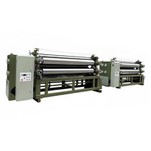

As modern industry increasingly demands high-precision and high-performance material processing, hot press machines have become widely used across various sectors. They can be categorized into different types based on structure, heating method, and level of automation, with each type offering unique advantages in efficiency, material compatibility, and processing characteristics.
Based on the heating method, hot press machines are primarily divided into electric-heated and steam-heated types. Electric-heated machines provide rapid heating and precise temperature control, making them ideal for high-precision applications. Steam-heated machines are well-suited for large-scale production, particularly in processing metal sheets and large composite parts, offering efficient and uniform heating.
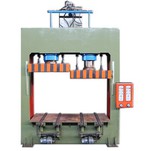
According to structure and operation mode, hot press machines can be classified as platen-type, vertical-type, and hydraulic-type. Platen-type machines are commonly used for laminating sheets and composite materials, offering simplicity and ease of operation. Vertical-type machines are suitable for small components and electronic parts, enabling precise pressing. Hydraulic-type machines use a hydraulic system to deliver stable pressure, allowing the processing of high-strength materials and complex structures, often applied in aerospace and automotive manufacturing.
With the advancement of smart manufacturing, automated hot press machines have become increasingly common. Fully automated machines integrate intelligent control systems that automatically adjust temperature, pressure, and timing based on material and process requirements, reducing human error and enhancing production efficiency and product consistency. These machines are particularly valuable for high-volume and high-precision manufacturing.
Additionally, specialized hot press machines, such as hot isostatic presses and vacuum hot presses, are used for unique materials and advanced production processes. Hot isostatic presses apply uniform pressure from all directions, optimizing the internal structure of materials, while vacuum hot presses operate in a vacuum environment to prevent oxidation or bubble formation, ensuring material purity and stability.
Overall, the variety of hot press machines, ranging from traditional electric-heated models to modern intelligent systems and high-end specialized presses, meets the diverse material processing needs of various industries, driving technological advancement and improving production efficiency.