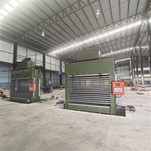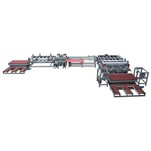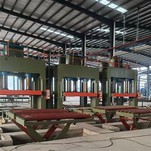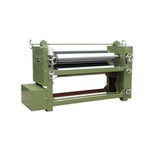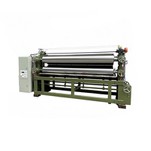

Cold press machines are devices that shape and press materials at room temperature. They are widely used in various industries due to their ease of operation, reliability, and high processing precision. Understanding their applications helps businesses select appropriate equipment and improve production efficiency and product quality.
In metal processing, cold press machines are primarily used to form sheets, parts, and structural components. Metal powders, copper, aluminum, and steel can be evenly pressed and densified to produce high-strength, dimensionally stable products. This application is common in manufacturing automotive components, appliance metal casings, mechanical structures, and hardware products.
In powder metallurgy, cold press machines play a critical role in producing powdered parts. By precisely controlling pressure, metal powders are compressed into the desired shape and density, providing optimal conditions for subsequent sintering and improving the mechanical properties and stability of parts.
In composite material and electronic component manufacturing, cold press machines are used for laminating multiple layers, bonding tightly, and packaging microelectronic devices. Materials such as carbon fiber, glass fiber composites, conductive adhesives, and electronic encapsulation materials maintain structural integrity and dimensional accuracy under cold pressing, ensuring stable material performance.
Additionally, cold press machines are used for lightweight material processing, new eco-friendly material production, and laboratory material research. By adjusting pressure and application time, various new materials can be tested for density, strength, and formability.
Overall, cold press machines have wide-ranging applications across metal processing, powder metallurgy, composites, electronic components, and new material development. With their high precision, controllability, and safety, they have become essential equipment in modern industrial manufacturing.