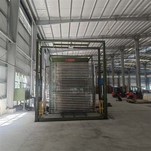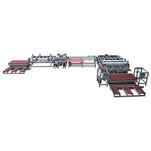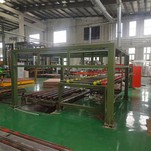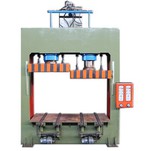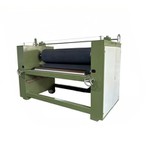

Cold press machines, widely used in modern industrial manufacturing, can be categorized based on the method of pressure transmission and application requirements. Different types vary in structure, pressure application, operation, and field of use, making it important for businesses to choose according to material characteristics and processing needs.
Hydraulic cold press machines are the most common type. They operate by using a hydraulic pump to pressurize oil, which is transmitted to the platen through hydraulic cylinders, providing stable and uniform pressure. Hydraulic presses are suitable for high-strength metal parts, powder metallurgy products, and thick sheets, ensuring density and dimensional accuracy. They offer a wide adjustable pressure range, stable operation, and can be automated.
Mechanical cold press machines use mechanical transmission systems, such as gears, cranks, or screws, to amplify externally applied force and transfer it to the platen. These machines have simple structures, are easy to maintain, and are suitable for sheet processing, routine batch production, and medium- or low-strength material pressing.
Pneumatic cold press machines utilize compressed air to drive cylinders or pistons, generating pressure for lightweight or temperature-sensitive materials. Pneumatic systems respond quickly and offer flexible operation but are limited in pressure output, making them unsuitable for high-strength or thick materials.
There are also composite cold press machines, which combine the advantages of hydraulic and mechanical or pneumatic systems to achieve high-precision, efficient pressing. Composite machines are often used for complex structural components and high-precision electronic parts, balancing pressure stability and production efficiency.
Overall, cold press machines come in various types, each with distinct advantages. When selecting equipment, businesses should consider material properties, processing precision, production capacity, and level of automation to ensure the machine meets process requirements and enhances manufacturing efficiency.