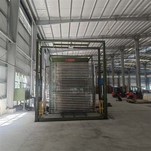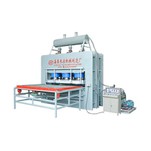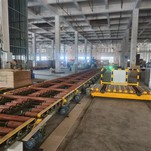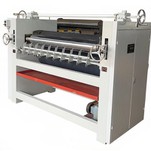

Sanding machines are essential for grinding, polishing, and smoothing workpiece surfaces in industrial production. Their structural features directly affect processing performance, operational convenience, and durability. Modern sanding machines typically consist of a sanding wheel or belt drive system, a workpiece support or feeding system, an adjustment and control system, and safety protection components. Each part is closely integrated to ensure efficient, precise, and continuous processing.
Firstly, the sanding wheel or belt drive system is compact and stable. Motors drive sanding wheels through belts, gears, or direct connections, or move sanding belts continuously via rollers, providing high-speed, stable friction to grind the workpiece surface. Drive systems often include adjustable speed functions to accommodate different materials and process requirements, ensuring uniformity and precision.
Secondly, the workpiece support or feeding system is designed for stability. Belt sanders use conveyors to move workpieces continuously into the sanding area, while disc or circular sanders use worktables to hold and stabilize workpieces during sanding. Feeding systems typically allow speed and pressure adjustment, ensuring even contact with the sanding surface and consistent results.
Thirdly, the adjustment and control system is highly integrated. Modern machines feature control panels to adjust sanding wheel or belt pressure, speed, vibration amplitude, and grit size, meeting various processing requirements. Advanced models may include automatic sensing systems that adjust sanding parameters based on workpiece thickness and surface condition, enhancing precision and efficiency.
Additionally, sanding machines are designed for safety and environmental protection. Dust covers and extraction systems minimize airborne particles, while emergency stop and overload protection devices ensure operator safety. Wear-resistant materials and easy-to-clean designs guarantee long-term, stable operation.
In summary, the structural features of sanding machines include compact and stable drive systems, well-designed workpiece support and feeding, integrated adjustment and control, and safety and environmental protection. These characteristics ensure efficient, precise, and reliable surface processing in industrial production.