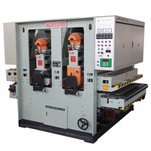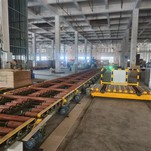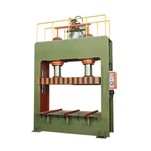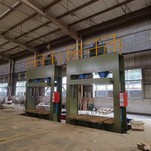

A cold press machine is a type of equipment that applies pressure to materials at room temperature or near-room temperature, widely used in metal forming, powder metallurgy, sheet processing, and electronic component manufacturing. Its primary working principle is based on the transmission of force and the plastic deformation of materials, enabling pressing, shaping, or densification.
The core components of a cold press machine include the platen, pressure transmission system, guide mechanism, and control system. During operation, the material is placed between the lower and upper platens. Pressure is applied through hydraulic, mechanical, or pneumatic systems. As the pressure gradually increases, the material undergoes plastic deformation or particle rearrangement, achieving the desired shape or density.
The hydraulic cold press is the most common type. Its principle involves a hydraulic pump pressurizing liquid, which is transmitted via a cylinder to the platen. The hydraulic system provides stable and adjustable pressure, allowing controlled and uniform processing suitable for high-strength materials or complex components.
Mechanical cold presses transmit externally applied force to the platen through mechanical mechanisms such as gears, cranks, or screws. These machines have simple structures, are easy to operate, and are suitable for conventional forming processes.
Pneumatic cold presses use compressed air to drive pistons or cylinders, applying pressure to lightweight materials or in rapid pressing scenarios. Pneumatic systems respond quickly but have limited pressure capacity, making them unsuitable for high-strength materials.
In general, cold press machines transmit force to cause plastic deformation or particle densification at room temperature, completing forming or pressing. Their principle is simple and reliable, applicable to a wide range of materials and processes, while offering safe operation and low energy consumption, making them indispensable in modern manufacturing.