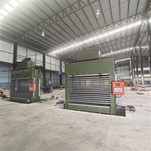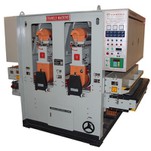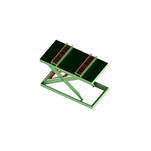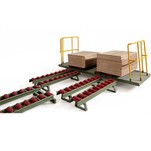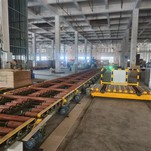

Non-roller lift machines are vertical material handling devices widely used in industrial production, warehousing, and logistics. They are primarily designed for lifting and transferring goods or materials vertically. Compared to roller-equipped lifts, non-roller lift machines have a more compact structure, emphasizing vertical stability and load capacity. Their structural features directly affect safety, carrying performance, and service life.
Firstly, non-roller lift machines feature a sturdy lifting platform and support structure. The platform is usually made of high-strength steel or aluminum alloy, providing excellent load-bearing capacity and resistance to deformation. The supporting frame is robust, often using columns or box-shaped steel structures, ensuring that goods remain level during lifting and preventing tilting or shaking.
Secondly, the drive system is precisely designed. Non-roller lifts typically use electric hydraulic or chain gear drives, where motors power hydraulic cylinders or chains to achieve smooth lifting. The drive system offers reliable load capacity and precise control, allowing adjustable lifting heights and stable operation.
Thirdly, safety devices are comprehensive. Non-roller lift machines are equipped with limit switches, anti-fall mechanisms, and overload protection to safeguard both goods and operators. Protective rails or gates are installed at platform edges and columns to prevent material from falling or accidental injury during operation.
Additionally, the control system is highly intelligent. Operation panels often include buttons or touch controls for manual or automatic lifting. Some advanced models can integrate with warehouse management systems for remote control and scheduled operation, improving efficiency.
In summary, non-roller lift machines are characterized by sturdy platforms, precise drive systems, comprehensive safety features, and intelligent control. These structural characteristics provide a stable and safe vertical lifting solution suitable for warehousing, industrial production, and logistics operations.