

Hey there! As a supplier of Double Head Sanding Machine, I've been getting a lot of questions about how the rotation direction of the sanding heads affects the sanding results. So, I thought I'd share some insights based on my experience in the industry.

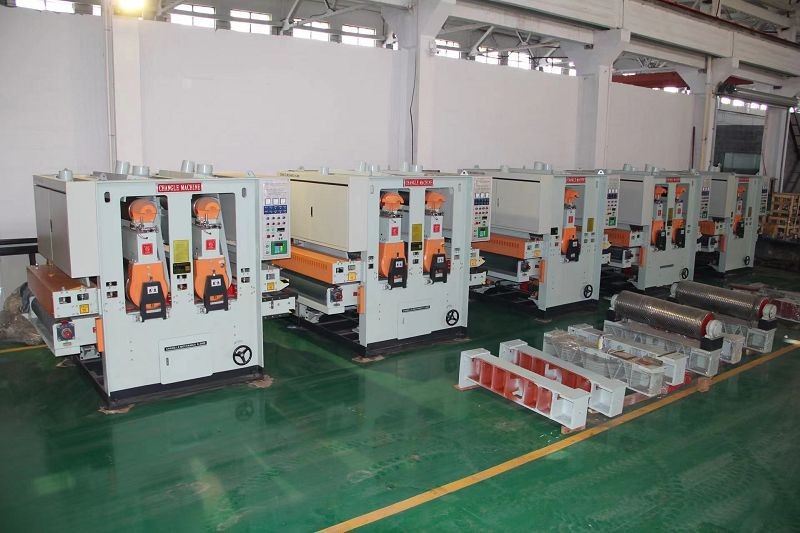
First off, let's talk about what a double head sanding machine is. It's a powerful tool used in woodworking and other industries to smooth and finish surfaces. It has two sanding heads that can work simultaneously, which makes the sanding process faster and more efficient. But the rotation direction of these sanding heads can have a significant impact on the final result.
The Basics of Sanding Head Rotation
There are two main rotation directions for the sanding heads: clockwise and counter - clockwise. Each direction has its own set of advantages and disadvantages, and understanding them can help you achieve the best sanding results.
Clockwise Rotation
When the sanding head rotates clockwise, it tends to push the material being sanded in a certain direction. This can be beneficial in some cases. For example, if you're sanding a long board, a clockwise rotation can help keep the board stable on the machine. The force exerted by the clockwise - rotating sanding head can prevent the board from shifting or vibrating too much during the sanding process.
However, clockwise rotation can also cause some issues. If the material is soft or has a loose grain structure, the clockwise rotation might dig into the wood too much, leaving behind uneven marks. This is especially true if the sanding pressure is too high.
Counter - Clockwise Rotation
On the other hand, a counter - clockwise rotation can have a different effect. It can be better for sanding materials with a more delicate surface. The counter - clockwise motion can gently remove the top layer of the material without causing too much damage. This is great for finishing work where you want a smooth and even surface.
But just like clockwise rotation, counter - clockwise rotation also has its drawbacks. If the material is very hard or has a tight grain, the counter - clockwise rotation might not be as effective in removing material quickly. You might end up spending more time sanding to achieve the desired result.
Impact on Surface Finish
The rotation direction of the sanding heads can greatly affect the surface finish of the material. A proper rotation direction can result in a smooth, even finish, while the wrong direction can lead to a rough or uneven surface.
Smoothness
When the rotation direction is chosen correctly, the sanding process can create a very smooth surface. For example, if you're sanding a wooden tabletop, a well - chosen rotation direction can make the surface feel like glass. The sanding particles on the sanding head can evenly abrade the material, leaving behind a consistent finish.
However, if the rotation direction is incorrect, the surface might end up with scratches or ridges. These imperfections can be difficult to remove and can ruin the overall look of the finished product.
Grain Appearance
The rotation direction also affects the appearance of the wood grain. A good rotation direction can enhance the natural beauty of the grain, making it more visible and appealing. For instance, a counter - clockwise rotation might be better for highlighting the grain in some types of wood. On the other hand, the wrong rotation direction can make the grain look muddled or obscured.
Influence on Material Removal Rate
The rotation direction of the sanding heads can also impact how quickly the material is removed. This is an important factor, especially when you're working on a large project and need to finish it in a timely manner.
Clockwise for Faster Removal
In general, a clockwise rotation can sometimes lead to a faster material removal rate. The way the sanding head rotates can cause more aggressive abrasion, which means more material is removed with each pass. This can be useful when you need to quickly reduce the thickness of a board or remove a large amount of material.
Counter - Clockwise for Precision
However, if you need more precision in your sanding, a counter - clockwise rotation might be a better choice. It allows for more controlled material removal, which is great for fine - tuning the surface or working on delicate areas.
Choosing the Right Rotation Direction
So, how do you choose the right rotation direction for your sanding project? Well, it depends on several factors.
Material Type
The type of material you're sanding is one of the most important factors. For softwoods like pine or cedar, a counter - clockwise rotation might be better to avoid over - sanding. For hardwoods like oak or maple, a clockwise rotation could be more effective for faster material removal.
Project Requirements
The requirements of your project also play a role. If you're looking for a quick and rough sanding to prepare the material for further processing, a clockwise rotation might be the way to go. But if you're aiming for a high - quality finish, a counter - clockwise rotation could be more suitable.
Our Double Head Sanding Machine
At our company, we offer a range of Double Head Sanding Machines that are designed to give you the best sanding results. Our machines are equipped with adjustable sanding heads, which means you can easily change the rotation direction according to your needs.
We also have Large Sanding Machines for big - scale projects and Board Sander Machines for more specialized tasks. Our machines are built with high - quality components to ensure durability and efficiency.
Conclusion
In conclusion, the rotation direction of the sanding heads in a double head sanding machine has a significant influence on the sanding results. Whether it's the surface finish, material removal rate, or the appearance of the wood grain, choosing the right rotation direction is crucial.
If you're in the market for a double head sanding machine or need more information about how to optimize your sanding process, don't hesitate to get in touch. We're here to help you make the best choice for your projects.
References
- Woodworking Machinery Handbook
- Sanding Techniques and Best Practices in the Industry


